|
|






1. Cheti Chand  This
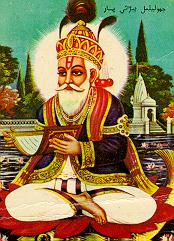
is to celebrate the birth of Water god (Varun Devta) Sai Uderolal, popularly
known as Jhulelal. So much has been said and written about it that it would
be superfluous to repeat the event. In Sindh the beginning of the new year
was considered Cheti Chand. Some businessmen opened new account books; many
however, did that on the eve of Diwali. On the full moon day, people used
to go to a river or lake and offer 'Akho' with a pinch of rice mixed with
milk mand flour. If there was no river or 'Darya', the ritual was performed
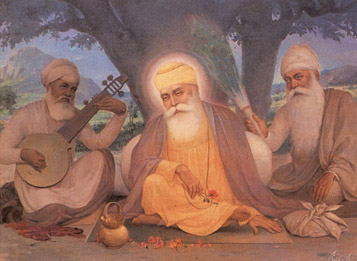
at a well. Even Sikhs went toi temples or Gurdwara, because Guru Nanak's birthday
also took place on Purnima.
This
is to celebrate the birth of Water god (Varun Devta) Sai Uderolal, popularly
known as Jhulelal. So much has been said and written about it that it would
be superfluous to repeat the event. In Sindh the beginning of the new year
was considered Cheti Chand. Some businessmen opened new account books; many
however, did that on the eve of Diwali. On the full moon day, people used
to go to a river or lake and offer 'Akho' with a pinch of rice mixed with
milk mand flour. If there was no river or 'Darya', the ritual was performed
at a well. Even Sikhs went toi temples or Gurdwara, because Guru Nanak's birthday
also took place on Purnima.
2. Sagra (Sacred thread)
Sindhi Bhaibands generally lived in foreign countries; therefore, their wives
were always worried about the good health of their husbands. For this purpose
they performed pooja and go on the fast on four Mondays of Sharwan month.
After which they perform pooja, distribute sweet rice and then get the sacred
thread tied by the priests (Banbhan). Here in India, the priests have made
a show business which costs nearly 500-800 rupees, a gimmick to knock out
money.
3. Mahalakshmi's Sacred
Thread (Mahalakshmi-a-jo-Sagro)
This sacred thread had sixteen strips and sixteen days. On the day when the
sacred thread was to be untied, it was celebrated as an important day and
special savouries like satpura and pakwan of Suji & Maida were made and distributed
firstly to the priests and the poor and afterwards the remaining savouries
were used by family members.
4. Fasts In Sindh,
generally Mondays & Saturdays, Giyaras or Umaas were observed as fasts (vrats).
During the fast of Satyanarayan and nine days of Ekaanaas, only one time meal
was generally taken.
5. Teejri This
takes place in the month of Shrawan when married women and girls painted their
handsand feet mwith Mehndi, go on fast for the whole day, during which they
used to play games, swing in Jhulas and sing lovable songs. In the night after
making an offering to the moon, they used to break the fast.
6. Akhan Teej On
this day, in the moonlight, new water earthern pots were kept and everyone
was offered clean and cool water. The significance of this day was to offer
water to the thirsty. Hence at every nookand corner, the sharbat, with pieces
of apple in it, was offered to passerbys alongwith 'prasad'. On this day,
it was also customary to send new earthern pots and fruits to priests and
Gurdwara.
7. Un-Matyo During
the month of Sharwan, on the Baaras of Krishna Paksha. Cereals were changed
in food, i.e. instead of wheat and rice, the chapatis made of gram flour (Besan)
were eaten.
8. Ban Badhri In
the month of 'Bado', during the Baaras of Shukla Paksha, god Varun had taken
avtaar. In lieu of that small insects like ants etc. were fed Gur(jaggery)
and Musti. married daughters were invited by their parents for food.
9. Somavati Umaas In
certain months Umaas takes place on a Monday. That day is considered important
for having a "dumb dip' in the waters; without talking to anyone early in
the morning. It is also, called 'Gungee Umaas".
10. Nandhi and Vaddi Thadri
Both these takes place in the month of Shrawan. On the day before Thadree
day, people cook lola (sweet flour cakes) and rote (fried cakes) because there
has to be no lighting of fire in the house on the Thadree day. The lolas and
Rotes are eaten with curd. On that day drops of water also sprinlkled on the
cooking fire to appease Sitladevi Mata.
11. Janamashtami, Ram Navmi
and Shivratri Since Lord Krishna
was born after midnight, on Janamashtami, bhajans and kirtan were held in
temples till midnight. On Ram Navmi, Lord Rama's birthday was celebrated.
On Shivratri people used to drink 'Thaadhal' with some 'bhang' in it, after
making offering of it in the Mahadev temple. In the villages and cities big
pots of 'Taahri' (sweet rice) were prepared and distributed among all.
12. Tirmoori On
this day parents send ladoos & chiki (Laaee) made of Tils to their daughters.
On the Makar Sankrant day the sun move from south to north. It is therefore
also called 'Dutraan' or 'Tirmoori'. In Mahabharat battle Bhisham Pitamah
did not breath his last till 'Datraan' since on this day there happens flush
of light in Dev Lok.
13. Dassera A
few days before Dassera there used to be Ramlila programme which was attended
by throngs of people. On the Dassera day the colourful effigies of Ravana,
Kumbhkarna and Meghnath were burnt.
14. Diyaaree Two
days before Diwali people started lightling Diyaas (earthern lamps) from 'Dhan
Teras'. The bazars used to be full with prospective consumers. Friends and
relatives used to meet one another with affection and extended pleasantries
and sweetmeats. In the night, Laxmi Poojan took ;place when all the members
of the family prayed with reverence and reslpect. In the night, people used
to take their in hands a stick to which a rag dipped in oil was tied which
was burnt. It was called 'Mollawaro'; everyone shouted 'Mollawaro..... Mollawaro'....
15. The Giyaras of Kati
On this day people used to be engaed
in giving charity. The whole bazar would be full with hundreds of beggars
and the needy, who would spread a cloth before them, on which people, according
to their mite, kept on throwing money, Bhugra, fruits etc. The jugglers used
to arrange their Tamashas on the road with monkeys and bears dancing on the
tunes played by the jugglers. An atmosphere of gaiety and gay prevailed all
through the day.
16. Navratra During
these days devotees mof Devi ate once in a day and did not even shave and
hair cut. Ladies sang bhajans. In Nagarparkar they used to dance like Garba
in Gujrat. On the day of Lal Loee children used to bringg wood sticks from
their grand parents and aunties and like a fire camp burnt these sticks in
the night with people enjoying dancing and playing around fire. Some ladies
whose wishes were fulfilled offered coconuts in the fire and distributed prasad
'Sesa'; this continued till midnight.
17. Nariyal Purnima
During the Purnima of Shrawan month
sisters tied Rakhi to their brothers. This day is called as "Rakhree Bandhan'.
Even the near cousins used to binds Rakhis. Sisters used to come from far
off places and towns to specially tie Rakhis to their brothers. There was
so much affection and love. Those cities and places where there were rivers
or sea, people used to offer coconuts and milk to the God of Waters 'Varun
Devta so that those who were travelling in ships and boats should have a safe
and a sound journey.
18. Shraadh Like
in India the month of September 'Bado' was meant for Krishna Paksha as Pitar
Pakhiya. If any member of the family who had died on particular (tithi) day
and date, a Shraadh was offered for the solace of the deceased's soul. The
Brahmins were given food and Dakhshina. It is said that Arya Samaj carried
out a strong movement against Shraadh, but the .Shraadhs continued because
of the faith of people since they felt that through this method the deceased
members of the family are remembered and all the family members have a good
gathering.
19. Nagapanchmi(Gogro)
In those days whenever the snake
charmer brought snames, they were given some Dakhshina and also milk for the
sanmes. Nagpanchami is also called Gogro. It is a folklore from Kutch and
Gujarat. In Thatta, near Pir Pitho, there was a kingdom of king Gopichand.
Once his daughter Vachhalbai saw a flower flowing in the river. She obtained
the flower with the help of her friend. A saintly person's soul lived in that
flower. As Vachhalbai smelled the flower, the soul entered the stomach. After
a few months king came to know about pregnancy of his daughter and was also
told about smelling of the flower. But he knew no one would believe the story.
He therefore, ask four of his soldiers to take Vachhalbai in a chariot and
leave her in a deserted Jungle, where due to the snake bite one ox fell down
of the chariot. The soldiers could not run the chariot with one ox. At theat
time, a voice came from stomach of Vachhalbai, "Mother chant this mantra and
sprinkle water on the dead ox." Vachhalbai and the soldiers were surprised
but they did what they were told, and the ox recovered immediately. The soldiers
saluted Vachhaalbai with respect and left her in the deserted place. Over
a period of time Vachhalbai gave birth to a child who was called 'Gogro'.
When it cried in hunger, all the snakes used to collect there to feed him
turn with their poison. This poison gave strength to the child, who with his
power dug up a ditch and produce a spring of water.'Gogro' used to play with
snakes and drunk their poison. One day a Rajput king's caravan came to pass
from there. He was dying out of thirst. Gogro gave him water on the condition
that he must leave seven boys to live in the jungle. In order to save his
life king Chawan left seven boys there. How to feed the seven boys, became
a problem for Gogro. Ultimately not finding anu other way he started taking
more poison from the snakes. This created a discontenment among the snakes
and a small snake 'Han Khanu' was determined to kill Gogro; but it had a very
little poison. The great snake Python 'Ajgar' gave poison to him. The Cobra
said that it is a sin to kill our master. And he said that if Han Khanu killed
the Gogro, he would devour the han Khanu. Since that time the biggest of snakes
- Python has no poison and the cobra wherever it sees Han Khanu devours it.
Gogro had such a power that if he turned his eyes to the place where a snake
bit, the whole poison evaporated. That is why the Han Khanu bit Gogro on his
jaw where Gogro could not see the place. While dying Gogro said to his friends
"When I die you cook me and eat me up." His friends cut him in two pieces,
cooked him but did not feel like eating. So they threw the full pot in the
river. Some theives got hold of this pot. since they were hungry, they ate
all the pieces. As they realised soul went to their stomach they also become
realised souls and their third eye opened up, through which they could see
the future. These theives were called 'Mamooyoon Fakirs'. Many references
are made to this by Dr.Gurbaxani in his poems. Mahatam Gogro before he died,
told all his friends not to bite the people without a reason and also told
the people to consider snakes as their friends. Nagpanchami therefore, is
celebrated in the honour of the god of snakes.... Gogro.
20. Holi This
is a festival of colours in which all the young and old join together to express
their joy at the change of season. Some people correlate Holi festival with
Holika, the sister of Hirnakashyap, mythological son of Bhagat Prahlad. But
this is the different story.
Source: Jhulelal.com










©2004 DFW Sindhi Association